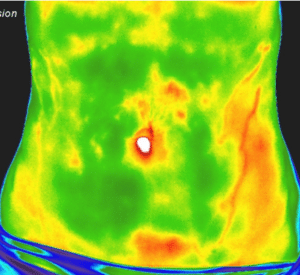
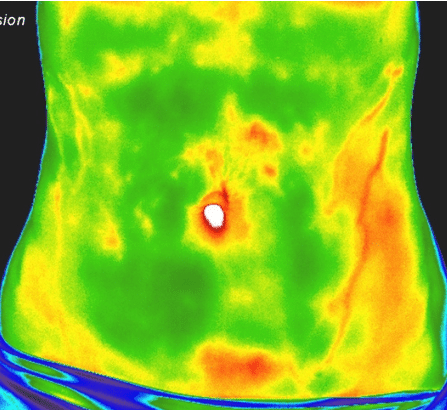
Thermography (also called thermal imaging), is a non-invasive imaging session that uses an infrared camera to map the temperature patterns across your body’s surface. Where there’s inflammation, there’s heat. Where there’s reduced circulation, there’s cool. Your body’s patterns tell a story — and thermography turns that story into a visual map your healthcare team can work with. Thermography has been around for awhile, but is still relatively unknown and underutilized. Read on to find out all about thermography.
What sets thermography apart:
– No compression
– No radiation
– Painless and contactless
– Safe for everyone including pregnant women, breastfeeding moms, and people with implants
– Real-time imaging — no waiting for dye, contrast, or lab work
– Great for tracking changes over time because you can establish a baseline and revisit it
How thermography fits into traditional care:
This isn’t a replacement for the imaging your doctor recommends. It’s an additional layer of insight — a way to see more of what’s happening in your body and have an informed conversation with your healthcare team about what comes next. Thermography sits at the earlier stages of the imaging-care ladder. It’s a low-cost, no-radiation, contactless way to map what’s happening on the surface of your body — useful as a “first look” at temperature patterns, often before any other imaging is considered. When a pattern warrants a closer look, the next step is typically ultrasound.
What the research shows:
A peer-reviewed review article published in *Cureus* (2022) summarized years of clinical research on thermography as a breast-health imaging technique. The findings:
– Thermography is positioned as a complement to existing imaging methods — not a substitute.
– It may be particularly relevant for people who can’t tolerate or choose not to use other methods.
– New advances in thermal sensors, imaging protocols, and computer-aided diagnostics are making the technology more accurate every year.
Conclusion:
In conclusion, thermography is a useful screening tool that can look for sources of inflammation or circulatory issues. Thermography can provide the necessary information to direct treatment or lead to further diagnostic imaging. It can also serve as a baseline to track changes over time. Hopefully, learning all about thermography will allow you to consider adding it as a tool in your health toolbox. Thermography sessions are offered on a limited basis. To find out when the next session is scheduled call our office or check the homepage for a schedule now link.



Comments are closed.