Acupuncture
Home » Acupuncture
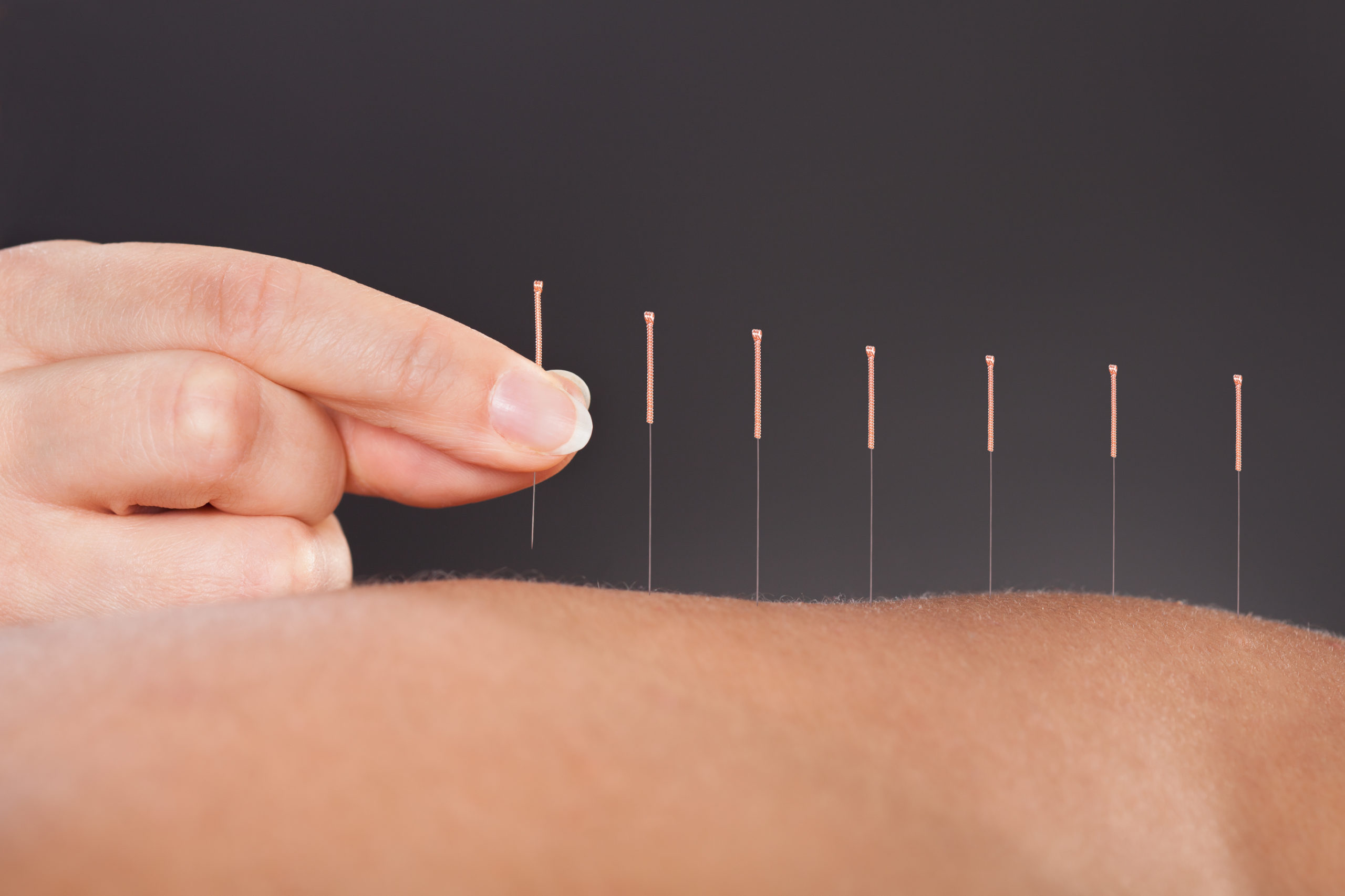
Image used under license from Shutterstock.com
Acupuncture
Historians have stated, “More people have benefited from Acupuncture over the course of fifty centuries than the combined total of all other healing sciences, both ancient and modern.” Acupuncture is beneficial for a number of different health conditions. Read on to find out more about this ancient treatment which has far ranging application and benefits.
History
Acupuncture, simply stated, is a health science which is used to successfully treat both pain and dysfunction in the body. Acupuncture has its roots deeply planted in China. In fact, authorities agree the science is between 5,000 and 7,000 years old. Its use spread throughout ancient Egypt, the Middle East, the Roman Empire and later into Western Europe as merchants and missionaries to China told of the amazing discoveries the people of the Orient had developed. Acupuncture did not become known on a national level in the U.S. until 1971 when diplomatic relations between China and America were relaxed.
Impact
At first glimpse, Acupuncture appears strange, as its primary notoriety is the utilization of needles placed in the skin at various locations to relieve pain or impact a body part or organ system. This begs the question of how needles placed in the skin can have any far reaching impacts on health.
Ancient Understanding
Early Chinese physicians discovered there is an energy network that is traversing just below the surface of the skin which communicates from the exterior to the internal organs and structures at over 1,000 “Acupoints” on the body. This energy works in harmony with the body’s circulatory, nervous, muscular, digestive, and genitourinary and all other systems of the body. When this vial energy becomes blocked or weakened an effect in a body system or anatomic location becomes evident. Stimulation of one or a combination of key “Acupoints” on the body may restore harmony to the affected area.
Modern Discovery
Modern science has tried to understand how acupuncture works. Through a combination of diagnostic imaging and observation they have determined 5 key effects of acupuncture. Number 1, acupuncture increases blood flow to selected areas. Number 2, acupuncture along the spine has been shown to increase the flow of cerebral spinal fluid. The third observation is that acupuncture has been proven to reduce muscle tension and trigger points. Number 4, acupuncture moderates the firing rates of nerves. What that means is that acupuncture can either increase or decrease the firing rates of nerves. This is where its effect on pain comes from. Acupuncture decreases the firing rates of pain nerves leading to decreased pain. Finally, acupuncture up regulates various tissue repair factors leading to increased healing.
Despite modern science’s effort to neatly catalogue acupuncture into something that is easily quantified or understood, there are still parts of acupuncture that defy explanation. How do needles on the skin impact organ systems? How do systemic issues like diabetes or high blood pressure respond to acupuncture? For some questions there are no answers at this time. We have a mountain of studies and anecdotal evidence that demonstrate the far reaching impact of acupuncture
Acupuncture Methodology in Office
In our office, acupuncture is performed using single use needles that are inserted using a guide tube to maximize accuracy. Most often, needles do not hurt. It typically feels like a sharpened pencil is being poked on the skin. Every once in awhile there is a needle that stings or burns. That sensation should fade in 30 seconds. If that sensation does not fade, that needle will be removed. The goal is to relax during acupuncture, not endure a burning or stinging sensation the entire time. For more information, schedule an appointment to talk to the doctor about how acupuncture could be used in your treatment.
